Location
New York, New York, 10013
About this event
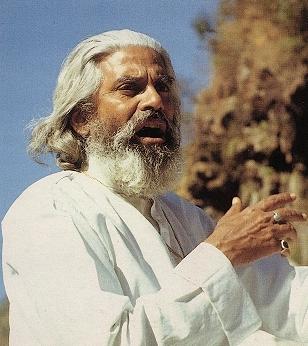
30th Anniversary Memorial Tribute

(November 3, 1918 - June 13, 1996)
India's Master Vocalist
Evening and Night Ragas
Concert of Pre-recorded Tapes of
Pandit Pran Nath performing Evening and Night Ragas
Curated by
La Monte Young and Jung Hee Choi
in a setting of
Imagic Light, Marian Zazeela
Light Point Drawings Nos. 28 and 29, Jung Hee Choi
Saturday, June 13, 2026, 7 PM
MELA Dream House
275 Church Street, 3rd Floor, New York
Admission $27. MELA Members, Seniors, Student ID, $21.
Limited seating. Advance reservations/ticket purchases recommended.
Doors open at 7:00 pm for concert seating.
Seating will be on carpeted floor and cushions only. For those requiring special assistance, please contact MELA to make arrangements at mail@melafoundation.org or (917) 603-9715.
PLEASE NOTE: To prepare for the scheduled concert the Dream House installation will be closed on Saturday, June 13, and will close early at 6 PM on Friday, June 12.
In celebration of Pandit Pran Nath's extraordinary life and work, MELA Foundation presents a memorial tribute concert of the Master's pre-recorded tapes of Evening and Night Ragas on Saturday, June 13, 2026, in the MELA Dream House, 275 Church Street, New York. This memorial tribute continues MELA Foundation’s long-standing tradition of honoring Pandit Pran Nath’s legacy through extended listening sessions of his raga performances in the Dream House light environment.
Experiencing these specially curated recordings of the master vocalist invites listeners into an extensive deep listening of long-form improvisations, attuning to the subtle intonation, expansive alap development, and meditative power of the ragas. The concert is curated by La Monte Young and Jung Hee Choi; Choi will present commentary on the music during the event. The program will unfold over several hours within the Dream House light environment, and audience members are welcome to enter, remain, and depart quietly at any time during the concert.
Pandit Pran Nath, who passed away on June 13, 1996, virtually introduced the vocal tradition of North Indian classical music to the West in 1970. His 1971 morning performance at Town Hall, New York City, was the first concert of morning ragas to be presented in the U.S. Subsequently, he introduced and elaborated to Western audiences the concept of performing ragas at the proper time of day by scheduling entire series of concerts at special hours. Pran Nath's majestic expositions of the slow alap sections of ragas combined with his emphasis on perfect intonation and the clear evocation of mood had a profound impact on Western contemporary composers and performers. Many students and professional musicians came to him in America to learn about the vast system of raga and to improve their musicianship. In 1972, Pran Nath established his own school in New York City under the direction of his disciples La Monte Young and Marian Zazeela, the Kirana Center for Indian Classical Music, which continues today through their senior disciple, Jung Hee Choi. In addition to Young and Zazeela, minimalist music composer Terry Riley became one of Pran Nath’s first American disciples. Fourth-world trumpeter Jon Hassell, jazz all-stars Don Cherry and Lee Konitz, composers Jon Gibson, Yoshimasa Wada, Rhys Chatham, Michael Harrison and Allaudin Mathieu, Sufi Pir Shabda Kahn, mathematician and composer Christer Hennix, concept artist and violinist Henry Flynt, dancer Simone Forti, and many others took the opportunity to study with the master. Over the years Pandit Pran Nath performed hundreds of concerts in the West, scores of them in New York City, and in Fall 1993 he inaugurated the MELA Foundation Dream House with three Raga Cycle concerts. He continued to perform here annually during his remaining years and on May 12 and 17, 1996, his two concerts of Afternoon and Evening Ragas in the Dream House were his last public performances.
La Monte Young pioneered the concept of extended time durations in 1957 and for over 60 years contributed extensively to the development of just intonation and rational number-based tuning systems in his performance works and the periodic composite sound waveform environments of the Dream House collaborations formulated in 1962 with Marian Zazeela. Presentations of his work in the U.S. and Europe, as well as his theoretical writings gradually had a wide-ranging influence on contemporary music, art and philosophy, including Minimalism, concept art, Fluxus, performance art and conceptual art. In L.A. in the '50s, Young played jazz saxophone, leading a group with Billy Higgins, Dennis Budimir and Don Cherry. He also played with Eric Dolphy, Ornette Coleman, Terry Jennings, Don Friedman, and Tiger Echols. At Yoko Ono's studio in 1960 he was director of the first New York loft concert series. He was the editor of An Anthology, which with his Compositions 1960 became a primary influence on concept art and the Fluxus movement. In 1962 Young founded his group The Theatre of Eternal Music and embarked on The Tortoise, His Dreams and Journeys, a large work involving improvisation within strict predetermined guidelines. Young and Zazeela helped bring renowned master vocalist Pandit Pran Nath to the U.S. in 1970 and became his first Western disciples. Described by Mark Swed in his October 2009 Los Angeles Times blog as "pure vibratory magic," Young's Just Alap Raga Ensemble, founded in 2002 with Zazeela and their senior disciple Jung Hee Choi, has become his primary performance vehicle. "For the past quarter of a century he has been the most influential composer in America. Maybe in the world." (Los Angeles Herald Examiner, 1985). "As the acknowledged father of minimalism and guru emeritus to the British art-rock school, his influence is pervasive" (Musician magazine, 1986). "Young is now widely recognized as the originator of the most influential classical music style of the final third of the twentieth century." (Strickland, Minimalism:Origins, 1993). "La Monte Young: Le Son du Siècle." (L'Express L'An 2000 Supplement, 1999).
Marian Zazeela is one of the first contemporary artists to use light as a medium of expression. Expanding the traditional concepts of painting and sculpture while incorporating elements of both disciplines, she developed an innovative visual language in the medium of light by combining colored light mixtures with sculptural forms to create seemingly three-dimensional colored shadows in radiant vibrational fields. Zazeela began singing in 1962 with La Monte Young as a founding member of The Theatre of Eternal Music, and performed as vocalist in almost every concert of the ensemble to date, in addition to creating the visual components of Dream House, their collaborative sound and light work. Her major work, The Magenta Lights, has been described in Art Forum as representing "the subtle relationship between precision and spirituality. [She] transforms material into pure and intense color sensations, and makes a perceptual encounter a spiritual experience." With Young in 1970, she brought Pandit Pran Nath to the U.S. and became one of his first Western disciples. She has since performed and taught the Kirana style of Indian classical music and accompanied Pandit Pran Nath in hundreds of concerts throughout the world. Zazeela's distinctive calligraphic style appears on many of Pran Nath's concert posters and recordings. Zazeela's Ornamental Lightyears Tracery has been credited by Glenn Branca in Forced Exposure #16, 1990, and by David Sprague in Your Flesh # 28, 1993, to have been the direct influence on Warhol's Exploding Plastic Inevitable. The Village Voice listed the [Church Street] Dream House as the Best Art Installation in New York 2014, "A charge for the mind as much as for the eye and ear, the Dream House feels like a gift to our beleaguered city, where headspace is the most precious real estate of all." Zazeela continued to perform as a vocalist until 2018 in The Just Alap Raga Ensemble and The Sundara All Star Band, which she founded with Young and Jung Hee Choi. In 2021 Zazeela was honored as one of the 14 artists to receive the prestigious Anonymous Was A Woman Award in recognition of her significant contributions. Zazeela's rarely-seen master works on paper were featured at Dia Beacon from 2019 to 2022, and most recently at Zazeela's graphic work and abstract calligraphic drawings, spanning from 1962 through 2003, were on view at Artists Space in New York until May 11, 2024.
Jung Hee Choi is a multimedia artist and musician based in New York, recognized for her extensive series of environmental compositions, Ahata Anahata, Manifest Unmanifest. Critics, including The New York Times and Artforum, have characterized her work as transcendental, hallucinatory, and transformative. Choi’s presentations often incorporate sound, colored light, evolving light-point drawings, incense, performance, and other media to create immersive, durational environments. Her video-sound performance and installation RICE, commissioned by MELA Foundation, was named one of the “10 Best of 2003” in the December issue of Artforum. A senior disciple of La Monte Young and Marian Zazeela in the classical Kirana vocal tradition, Choi has, since 2003, presented her installations both as solo works and in collaboration with Young and Zazeela in the Dream House Sound and Light Environments. Together, they co-founded The Just Alap Raga Ensemble in 2002 and have performed extensively in various configurations, including The Sundara Trio, The Sundara All Star Band, and The Theatre of Eternal Music. The New York Times featured Choi’s Tonecycle for Blues, performed by her electroacoustic and modal improvisation ensemble, The Sundara All Star Band, as one of the Best Classical Music Performances of 2017. Choi received her MA in Art and Sound from New York University and has taught North Indian raga at the Kirana Center for Indian Classical Music since 2008. She has also served as visiting faculty in the Music/Sound MFA program at Bard College, curated festivals, produced experimental television, and published on sound and cosmology. She has exhibited and performed widely, including at Casa del Lago UNAM, Dia Art Foundation, the Guggenheim Museum, Berliner Festspiele, FRAC Franche‑Comté, and Bundeskunsthalle.