-
Thu, Oct 15 06:00 PM
CSU Annual Gala 2026
About this event
Join us for the CSU Green Cities series:
Waterfronts in Transition - Gowanus Canal, Brooklyn ↔ HafenCity, Hamburg
Wednesday, April 29, 2026
12:00-1:00 PM ET (6:00-7:00 PM CET)
This virtual event features a structured 30-minute dialogue followed by audience Q&A, exploring the transformation of two globally significant urban waterfronts.
Speakers
Sagi Golan, Deputy Chief Urban Designer, NYC Department of City Planning; Adjunct Professor, Columbia GSAPP
Michael Trinkner, Associate Partner, KCAP Architects & Planners, Rotterdam
Moderator
Lance Jay Brown, FAIA, DPACSA, NOMA
Founder & Past President, Consortium for Sustainable Urbanization (CSU)
Talk Abstract
New York and Hamburg are two of the world’s great cities — dense, economically powerful, culturally vibrant, and under acute pressure to deliver more housing, more parks, more green space, more of what makes cities competitive and attractive. As port economies gave way to knowledge and service industries, both cities were left with something rare: large, well-located waterfront areas ripe for reinvention. The market noticed. Neither site was a blank slate — both carried the weight of their past: contaminated soil, toxic water, a quagmire of regulations, and a stubborn history of flooding. Both demanded intelligent integration of old and new, genuine engagement with existing communities, and the building of long-term equity and resilience into the equation. Turning the areas around required billions in public and private investment, decades of planning, interagency coordination, and perseverance. Today they are globally studied models of urban waterfront transformation. Sagi Golan and Michael Trinkner will share their experience of working on these transformative sites.
The Projects
Gowanus Canal BROOKLYN, NEW YORK
Rezoning underway · 2021–2035+
Once one of the most contaminated bodies of water in the United States - a Superfund site choked with a century of industrial waste, flooded with toxic sediment during Hurricane Sandy in 2012 - the Gowanus Canal is today at the center of one of New York City’s most significant urban transformations: a walkable, green, in-demand neighborhood built on a foundation of community advocacy, public investment, and a landmark 2021 rezoning.
· Community-led · HPD public land · Brownfield remediation · Climate infrastructure
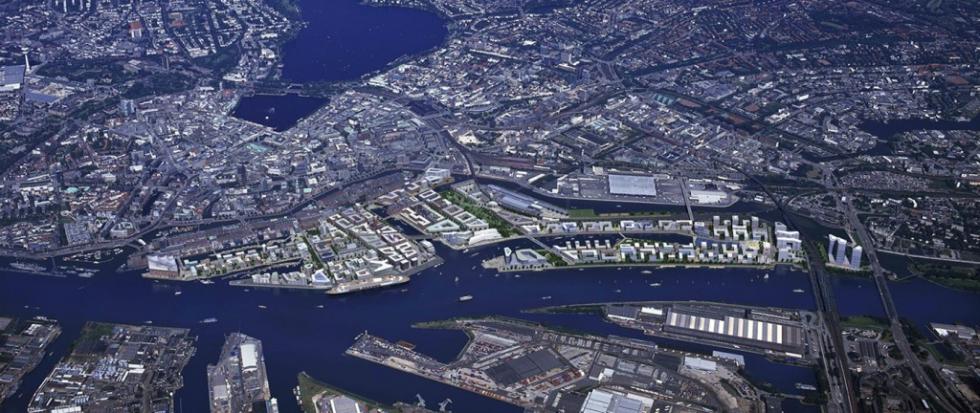
HafenCity HAMBURG, GERMANY
25 years in · 1999–present
Once a working port - 157 hectares of warehouses, quays, and rail yards sitting idle as Hamburg’s container trade moved downriver - HafenCity is now one of the most sought-after urban addresses in northern Europe: a mixed-use district for 15,000 residents and 45,000 jobs, anchored by the Elbphilharmonie, and recognized globally for its intelligence in dealing with flooding.
· Port to urban district · Flood intelligence · HafenCity GmbH · Mandatory sustainability
What they will discuss
Sagi Golan and Michael Trinkner will trace how each site went from backwater to thriving neighborhood — the sequence of public decisions, planning instruments, and market forces that made it possible. They will examine the specific role of urban design in each transformation, the challenge of building on contaminated ground, and how both projects have embedded climate resilience and flood adaptation into the public realm. The conversation will close with the hardest question: what does genuinely equitable waterfront development look like — and what would each speaker do differently today?
Speaker

Sagi Golan, Deputy Chief Urban Designer, NYC Dept. of City Planning Adj. Prof., Columbia GSAPP
Sagi Golan is an architect and urban designer serving as the Deputy Director of Urban Design at the New York City Department of City Planning, where he leads the design vision and public realm frameworks for major neighborhood plans across the five boroughs. His work operates at the intersection of architecture, city form, and public policy, focusing on translating core urban design principles into zoning tools, design guidelines, and strategies that shape how buildings meet the street, how public spaces function, and how large-scale development contributes to a cohesive and equitable urban fabric.
In addition to his public-sector leadership, Golan teaches graduate urban design at Columbia University’s GSAPP, coordinating studios that explore urban systems, climate resiliency, environmental justice, and narrative methods. Through his combined practice, teaching, and public engagement, he advances design as both a regulatory framework and a creative instrument for shaping dynamic and accessible environments.
Speaker

Michael Trinkner, Associate Partner, KCAP Architects & Planners Rotterdam
Michael Trinkner is an Associate Partner at KCAP Architects & Planners — founded in 1989 by Kees Christiaanse, a former OMA partner — one of Europe’s leading practices in large-scale urban design and waterfront regeneration, with offices in Rotterdam, Zürich, Paris, and Shanghai. KCAP co-authored the HafenCity masterplan following their 1999 competition win and has remained engaged across its 25-year development. His portfolio spans Jurong Lake District Singapore, Oberbillwerder Hamburg, Montpellier OZ Nature Urbaine, and the Red Apple in Rotterdam. He has also taught at the Academie van Bouwkunst in Amsterdam and the Stuttgart Academy of Arts.
Moderator/Host

Lance Jay Brown, FAIA, DPACSA, NOMA
Lance Jay Brown, FAIA, DPACSA, NOMA is a founding board member and Past President of the Consortium for Sustainable Urbanization He taught at Princeton and is the former Chair and Director of the Spitzer School of Architecture, CCNY. Educated at the Cooper Union he holds two master’s degrees from the GSD at Harvard University. He is a Fellow of the American Institute of Architects (FAIA) He is ACSA Distinguished Professor for Life and received the coveted AIA/ACSA Topaz Medallion for Excellence in Architectural Education. He has edited and authored numerous publications and consults, teaches, and lectures nationally and internationally.
Learning Objectives:
Participants in this event will:
1. Compare two landmark waterfront transformations — one community-initiated and mid-construction, one masterplanned and 25 years in — as case studies in climate resilience and urban regeneration.
2. Examine contrasting flood strategies: HafenCity’s design-with-water philosophy versus Gowanus’s remediation-and-infrastructure approach.
3. Evaluate how governance models, planning instruments, and urban design shape delivery, quality, and accountability.
4. Understand the tensions between climate resilience, affordable housing, and equitable public access — and who bears the cost when these goals conflict.
5. Identify transferable lessons for cities facing waterfront transformation under climate pressure.
Sponsor Organization for Green Cities
Consortium for Sustainable Urbanization (CSU), UN-Habitat, AIA New York, AIANY Planning & Design, the NGO Committee on Sustainable Development-NY, Habitat Professionals Forum for Sustainable Cities, Creative Exchange Lab (CEL), Global Urban Development (GUD), and the Columbia University Center for Buildings, Infrastructure and Public Space (CBIPS).